ICECOFFE 2026 SPEAKERS

Prof. Adjie Pamungkas, S.T., M.Dev.Plg., Ph.D., is a distinguished academic and researcher from the Department of Urban and Regional Planning at the Sepuluh Nopember Institute of Technology (ITS), Surabaya. His expertise spans coastal planning, urban development, regional planning, and disaster risk management. His academic work reflects a strong commitment to integrating spatial planning approaches with resilience-building strategies, particularly in the context of rapidly growing urban and coastal regions. Throughout his professional career and previous experience at the Center for Disaster Mitigation and Climate Change, Prof. Adjie Pamungkas has contributed extensively to research on disaster risk reduction and sustainable land use. His studies include examining the determinants of trained human resources in flood risk reduction and developing conservation strategies for land-use change in tropical springwater recharge areas. He also has experience in building community resilience to biological hazards in sustainable communities, implementing risk reduction through spatial planning in modern cities, and developing emergency infrastructure to enhance urban earthquake resilience urban heritage area and biosphere reserve area. His recent work focuses on integrating disaster risk management into urban spatial planning processes, as well as exploring historical insights into Surabaya’s development, particularly across urban and heritage site areas.
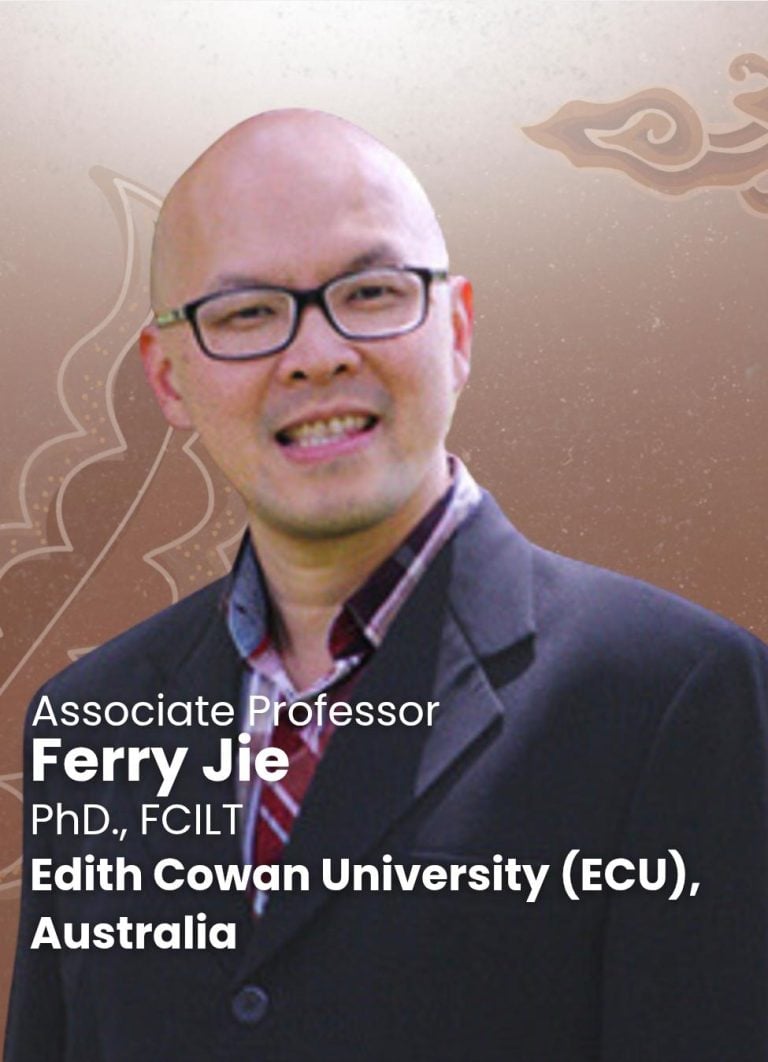
Assoc. Prof. Ferry Jie, PhD., FCILT from Edith Cowan University (ECU) is a fellow of the Supply Chain & Logistics Association of Australia (SCLAA) Committee. Prior to joining ECU, he has demonstrated strong scholarly and practitioners experience in supply chain strategies, including sustainable asset management across urban area and heritage sites. He has been widely invited as a keynote speaker and public lecturer at international conferences across countries such as Indonesia, Pakistan, Bhutan, Malaysia, Vietnam, China, the United Kingdom, Sri Lanka, and Australia. He has scopus index 30 and receive competitive grants and awards totaling over $1.7 million between 2017 – 2024. His recent works in 2025 – 2026 including studies on climate-related disclosure indicators in Indonesia, overtourism governance in Bali and Lombok Indonesia, biosecurity management strategies for varroa mites in Western Australia, and community waste behavior analysis in collaboration with local government.
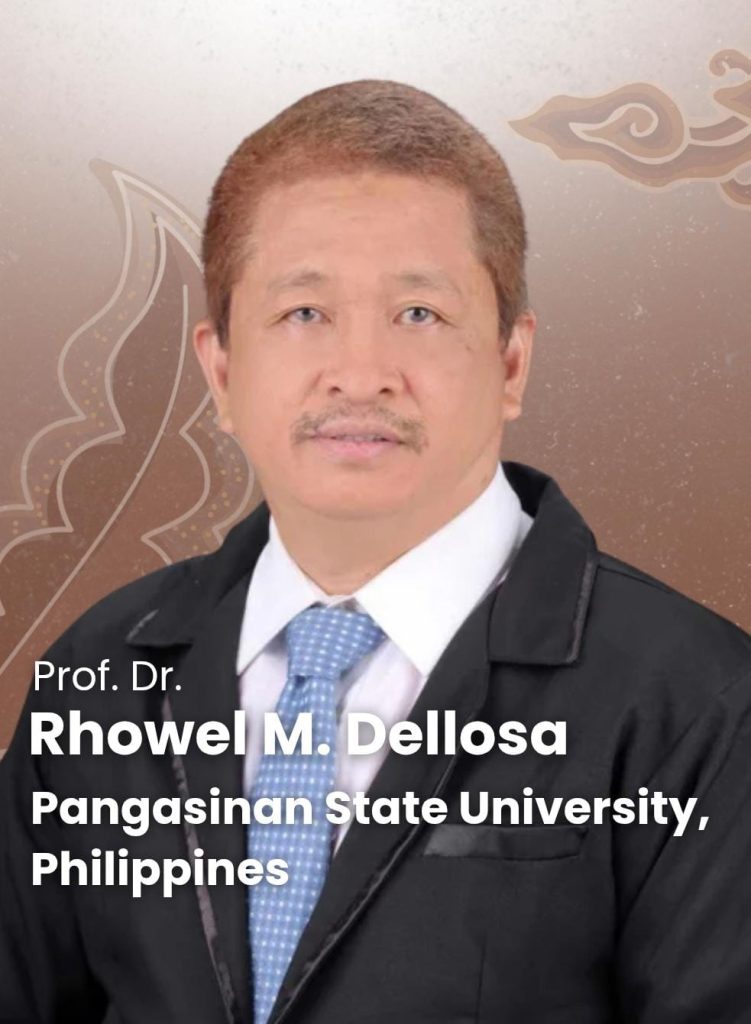
Prof. Dr. Rhowel M. Dellosa from Pangasinan State University (Lingayen Campus) Philippines, has academic expertise in computer engineering and artificial intelligence, with a distinctive focus on integrating these technologies into the preservation of biocultural varieties. His work reflects a strong interdisciplinary approach, combining advanced computational methods with agricultural and environmental applications to support sustainable development and biodiversity conservation. Throughout his career as Director of the Research and Development Office at PSU University, he has conducted extensive research in image processing, machine learning, and neural network-based classification systems. He is actively engaged as a speaker and reviewer in international forums, particularly in the fields of biomechanics and scientific writing for Scopus-indexed publications. His notable studies in biocultural include the implementation of ResNet50 CNN for detecting local rice plant diseases in the Philippines, as well as applications of image processing with fuzzy logic for classifying local bell peppers, chili peppers, coffee types, and lettuce seed varieties in the Philippines. He has also explored morphological comparisons of natural and hybrid lemon seedlings and citrus, as well as the classification of local coffee bean roast levels using neural networks.
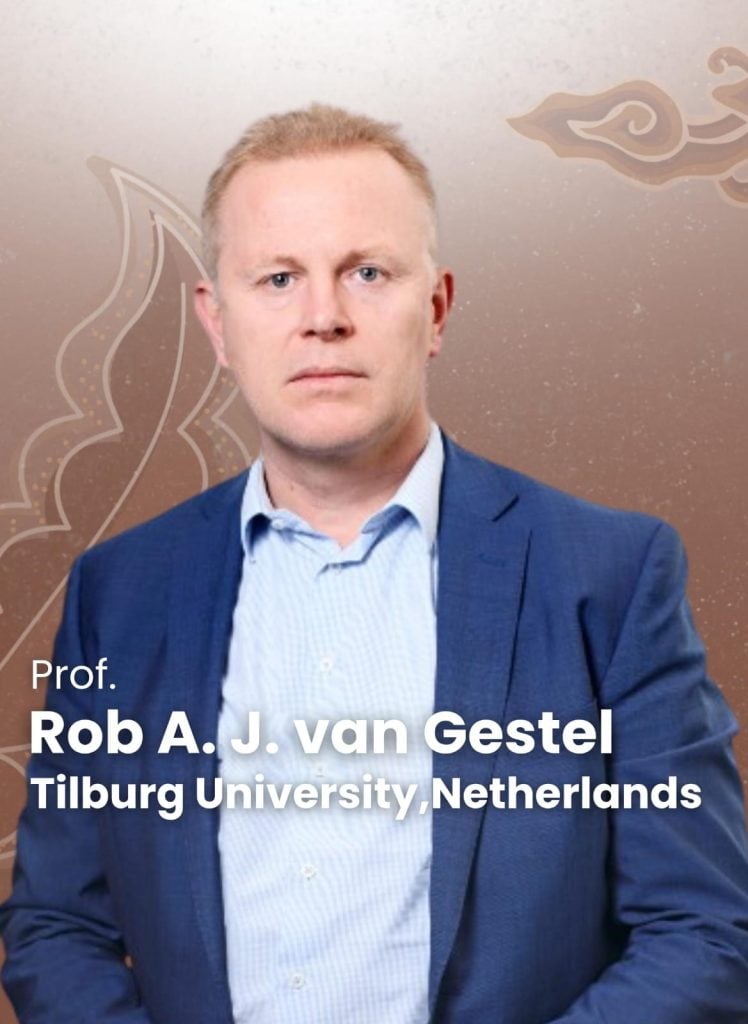
Prof. Rob A. J. van Gestel is a Professor at Tilburg University, the Netherlands, specializing in environmental law and policy research. His academic interests extend to multiculturalism and multi-stakeholder approaches within cultural heritage policy. He has contributed to scholarly discourse in Europe through numerous publications that critically examine legal research evaluation and governance, focusing on the interplay between peer review and bibliometric methods, as well as the growing role of private standards as alternatives to traditional public lawmaking. These works explore the dynamics of legal research assessment and the evolving role of governance frameworks. He has extensive experience as a speaker at various international forums, where he shares his expertise in legal research and policy development. In 2026, he has also been actively engaged as a visiting lecturer at UNESA through the Professor Matchmaking Program, contributing significantly to teaching and mentoring activities, particularly in the areas of multiculturalism and multi-stakeholder policy.
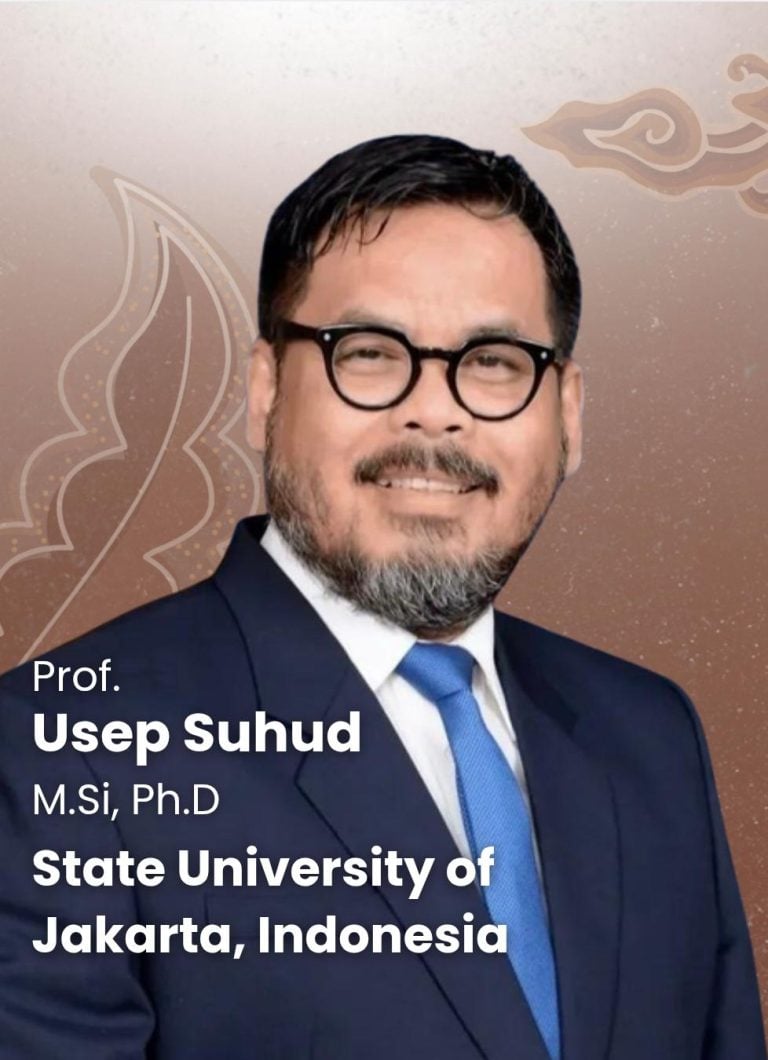
Prof. Usep Suhud, M.Si., Ph.D. is a Professor and practitioner from the State University of Jakarta. He is also a researcher at INTI International University Malaysia and Universiti Sultan Zainal Abidin, Malaysia, with a strong academic record in implementing SDGs-based strategies in green heritage tourism. He is frequently invited as a speaker at international conferences on topics such as green heritage tourism and SDGs-based tourism. Most recently, he presented on sustainable water tourism at the NERPS Conference 2026 in Tokyo.
His dedication to academic involvement in SDGs initiatives is demonstrated through his leadership as the chair of international academic mobility programs that integrate workshops, partnership development, industry visits, and community service initiatives focused on the Sustainable Development Goals (SDGs) in Indonesia and Malaysia. He also holds professional certifications in digital leadership from the National University of Singapore and in Structural Equation Modeling (SEM) from SREAMS Melbourne. His recent research in 2026 focuses on analyzing the retrofitting of historical structures, particularly transforming them into tourism strategies aligned with sustainable environmental conservation.

Dr. Asril Amirul Bin Zakariah is an academician from Universiti Sultan Zainal Abidin, Malaysia, specializing in natural resources law, including mining law, forestry law, and water law, as well as contracts related to environmental law. He has contributed as a research collaborator for UNESCO and was selected as a participant in the ASEAN Higher Education Leadership Forum 2025. As a dedicated researcher, one of his notable works is a book titled The Changing Food Law Landscape: Food Security, Sustainability and the Environment, published by Taylor & Francis. His other research focuses on the Tasik Chini Biosphere Reserve and environmental public interest litigation, particularly in identifying and analyzing issues of locus standi in Malaysia. He has also developed a policy brief on strengthening the enforcement of environmental administrative court (PTUN) decisions in Indonesia.
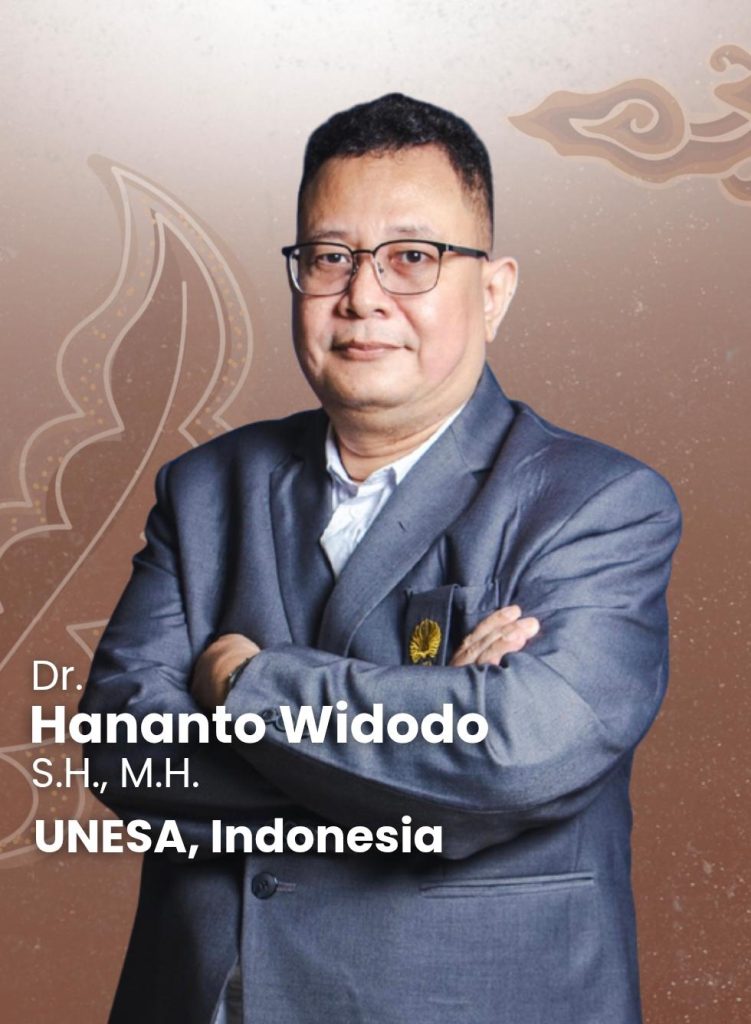
Dr. Hananto Widodo, S.H., M.H., from the State University of Surabaya, has extensive experience in teaching public policy formulation, institutionalization, and environmental policy. He has actively contributed as a columnist in various print and electronic media, where he discusses environmental policies and state liability in addressing environmental challenges. In addition to his teaching and writing experience, Dr. Hananto Widodo has been involved in significant research, such as the reconstruction of disaster management systems within the framework of disaster governance. He also has experience as an expert witness in administrative courts concerning environmental and government policy cases.
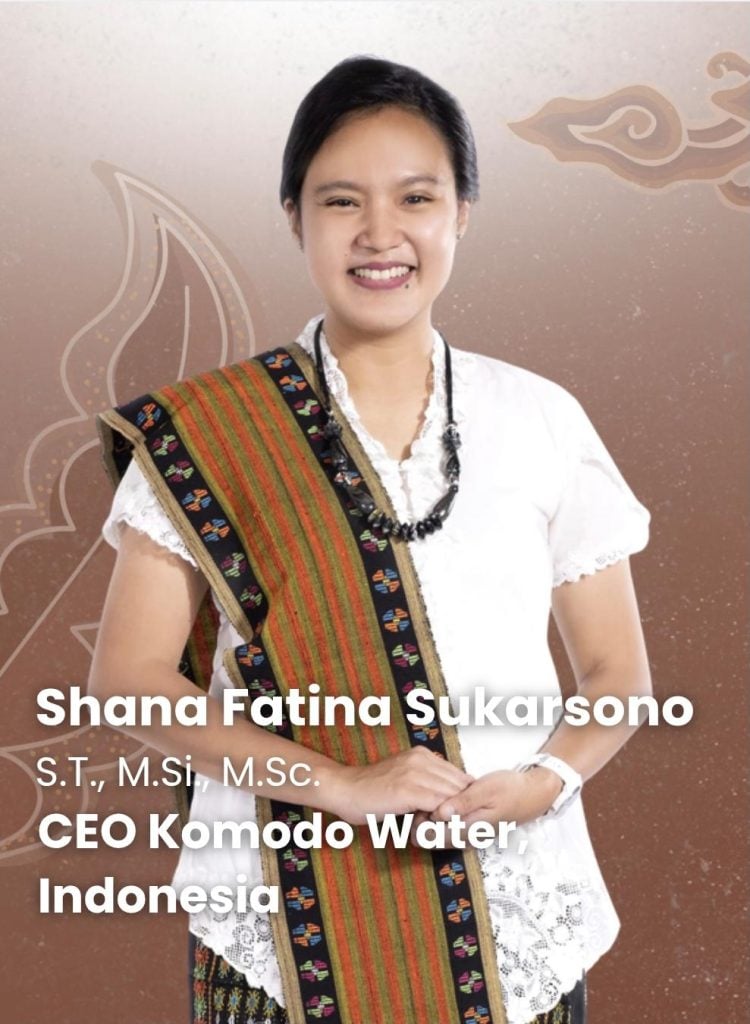
Shana Fatina Sukarsono, S.T., M.Si., M.Sc. is an inspiring young businesswoman who has been actively engaged in the field of clean water management in Indonesia since 2010, particularly in the Labuan Bajo area and Komodo National Park as UNESCO World Heritage Site and the natural habitat of the Komodo dragon (Varanus komodoensis) through KOMODO WATER (Tinamitra Nusantara Group). KOMODO WATER consistently focuses on issues related to water, renewable energy, waste circularity, climate change, and coastal rural communities. Shana Fatina has promoted the role of Komodo Water in water and coastal management through international forums such as the G20 (2022), Tamil Nadu Global Startup Summit (2025), and ASEAN Sparks Catalyst. As one of the inspiring women recognized at the Bayer Foundation Women Empowerment Award 2025, she is also an activist who has served as President Director of the Labuan Bajo Flores Tourism Authority and remains active in FOKAL (Forum of Academics and Environmental Activists). Her ‘ikigai’ is to bring clean water to heritage sites and the most remote communities.